Demolition Mania
Demolition Mania is a 2D multiplayer prototype built in Unity that explores strategy, precision, and environmental interaction within a turn-based combat system. Players take on the role of competing demolition workers attempting to eliminate each other inside a destructible office building.
The project focuses on how physics, time constraints, and visual feedback influence player decision-makingand clarity.
Demolition Mania
Demolition Mania is a 2D multiplayer prototype built in Unity that explores strategy, precision, and environmental interaction within a turn-based combat system. Players take on the role of competing demolition workers attempting to eliminate each other inside a destructible office building.
The project focuses on how physics, time constraints, and visual feedback influence player decision-makingand clarity.
Demolition Mania
Demolition Mania
Year:
2018
Year:
2018
Year:
2018
Collaborators:
Rugare Ponde
Collaborators:
Rugare Ponde
Collaborators:
Rugare Ponde
Industry:
Game Design & Development
Industry:
Game Design & Development
Industry:
Game Design & Development
Role:
Game Designer, Developer, UI/UX Designer
Role:
Game Designer, Developer, UI/UX Designer
Role:
Game Designer, Developer, UI/UX Designer
Client:
University of the Witwatersrand
Client:
University of the Witwatersrand
Client:
University of the Witwatersrand
Project Duration:
2 weeks
Project Duration:
2 weeks
Project Duration:
2 weeks
Problem
How can multiple physics-driven systems and projectile mechanics be combined into a readable and fair multiplayer experience?
Problem
How can multiple physics-driven systems and projectile mechanics be combined into a readable and fair multiplayer experience?
Solution
I designed a turn-based combat loop that balances player freedom with strategic pressure.
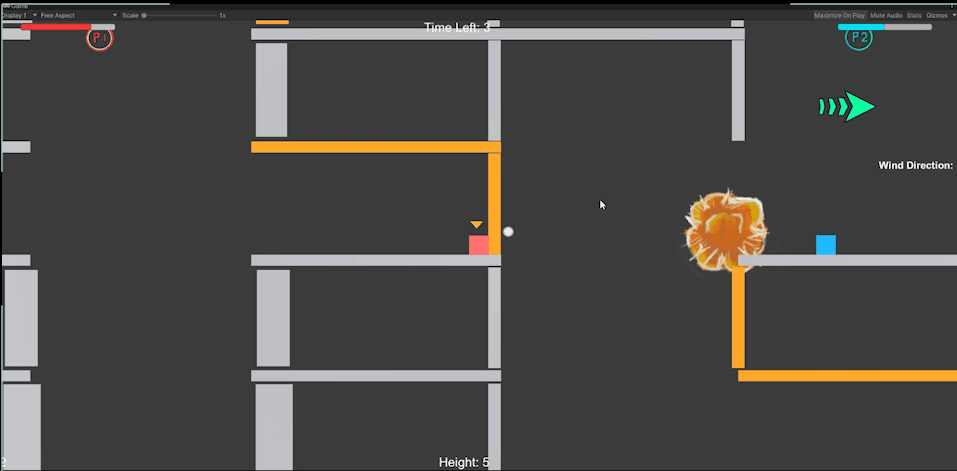
Players share a 15-second turn window that allows movement, jumping, and shooting.
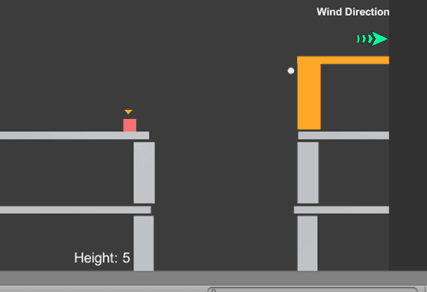
Projectile trajectories are influenced by gravity, height, and randomized wind.
The environment is fully destructible, allowing players to remove cover or create new paths.
Clear visual feedback communicates player state, turn order, and environmental changes.
This approach encouraged deliberate decision-making while maintaining an arcade-style pace.
Solution
I designed a turn-based combat loop that balances player freedom with strategic pressure.
Players share a 15-second turn window that allows movement, jumping, and shooting.
Projectile trajectories are influenced by gravity, height, and randomized wind.
The environment is fully destructible, allowing players to remove cover or create new paths.
Clear visual feedback communicates player state, turn order, and environmental changes.
This approach encouraged deliberate decision-making while maintaining an arcade-style pace.
Challenge
Several challenges shaped the final design:
System complexity: Balancing randomness (wind) with fairness required clear visual indicators.
UI clutter: Early versions relied heavily on text, which reduced visual clarity during gameplay.
Time management: Debugging complex systems highlighted the need to prioritize iteration over perfection.
These challenges reinforced the importance of clarity and restraint when combining multiple mechanics.
Challenge
Several challenges shaped the final design:
System complexity: Balancing randomness (wind) with fairness required clear visual indicators.
UI clutter: Early versions relied heavily on text, which reduced visual clarity during gameplay.
Time management: Debugging complex systems highlighted the need to prioritize iteration over perfection.
These challenges reinforced the importance of clarity and restraint when combining multiple mechanics.
Core Mechanics
Turn-Based System: A timer-based turn manager creates urgency without limiting player agency.
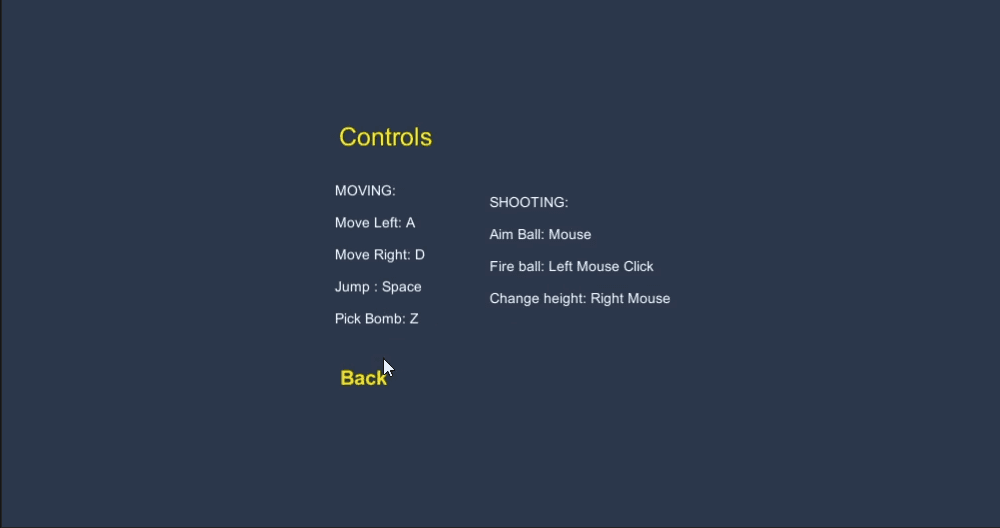
Physics-Based Shooting: Mouse-aimed projectiles affected by gravity and wind.
Destructible Environments: Explosions dynamically alter walls, floors, and cover.
Multiplayer Readability: Color-coded UI differentiates players and health states.
Game Feel Enhancements: Screen shake, and sound effects reinforce impact and feedback.
Core Mechanics
Turn-Based System: A timer-based turn manager creates urgency without limiting player agency.
Physics-Based Shooting: Mouse-aimed projectiles affected by gravity and wind.
Destructible Environments: Explosions dynamically alter walls, floors, and cover.
Multiplayer Readability: Color-coded UI differentiates players and health states.
Game Feel Enhancements: Screen shake, and sound effects reinforce impact and feedback.
Process
The project followed a multi-stage, iterative development approach.
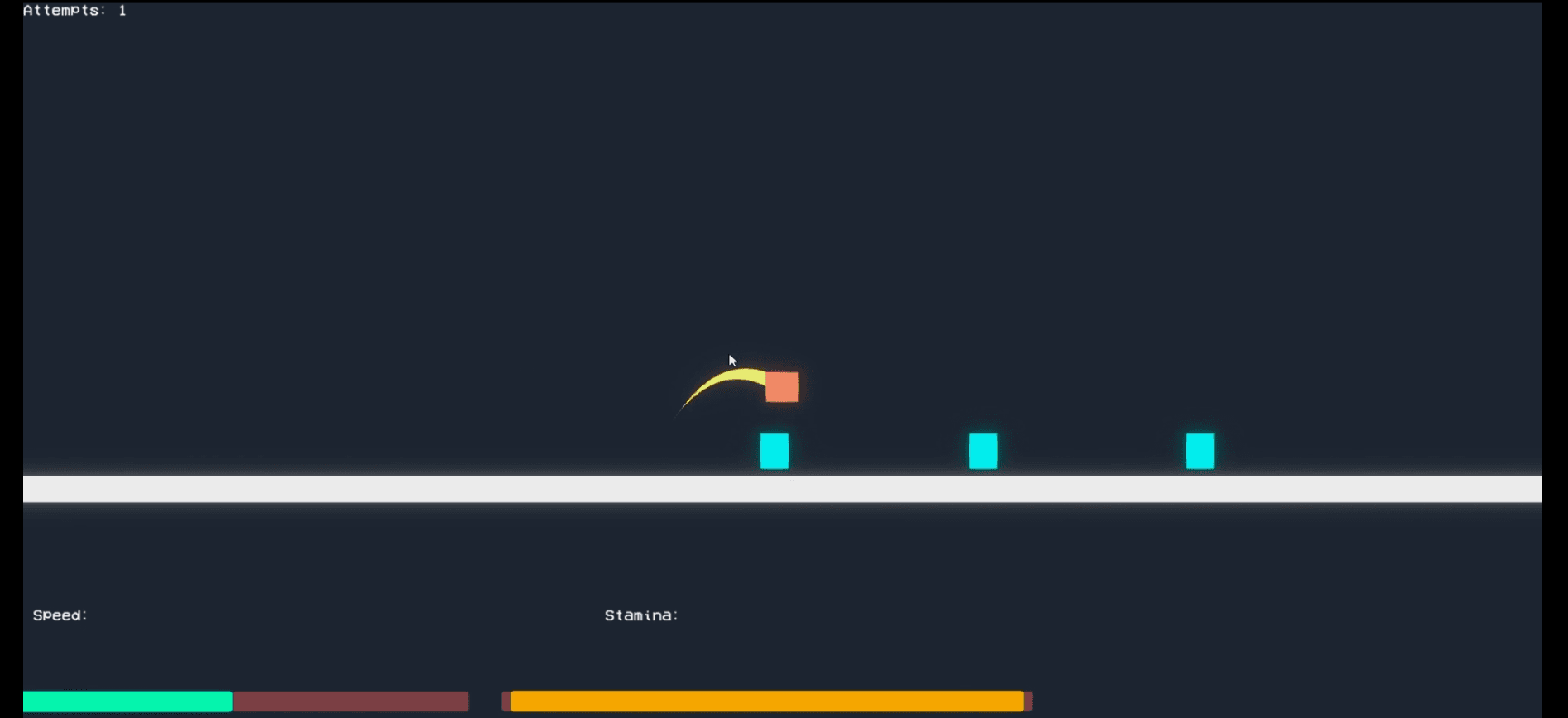
Iterative prototyping: The game was developed in two main versions—an initial bare-bones prototype to test core mechanics, followed by a refined version focused on balance and polish.
Peer feedback: Regular playtesting with peers informed adjustments to pacing, clarity, and overall experience
Game feel integration: Visual and audio feedback such as screen shake, and explosion sounds were added to reinforce impact and improve moment-to-moment interaction
This process helped transform a rough mechanical concept into a more controlled and readable multiplayer experience.
Process
The project followed a multi-stage, iterative development approach.
Iterative prototyping: The game was developed in two main versions—an initial bare-bones prototype to test core mechanics, followed by a refined version focused on balance and polish.
Peer feedback: Regular playtesting with peers informed adjustments to pacing, clarity, and overall experience
Game feel integration: Visual and audio feedback such as screen shake, and explosion sounds were added to reinforce impact and improve moment-to-moment interaction
This process helped transform a rough mechanical concept into a more controlled and readable multiplayer experience.
Tools Stack





Outcome & Learnings
The final prototype delivered a functional and engaging turn-based experience built around precision and strategy.
Key learnings:
Visual communication is essential when managing multiple dynamic systems.
Physics-driven mechanics require strong feedback to remain readable.
Destructible environments add depth but must be carefully balanced.
The project established a solid foundation for future expansion, such as power-ups, varied projectiles, or additional level layouts.
Outcome & Learnings
The final prototype delivered a functional and engaging turn-based experience built around precision and strategy.
Key learnings:
Visual communication is essential when managing multiple dynamic systems.
Physics-driven mechanics require strong feedback to remain readable.
Destructible environments add depth but must be carefully balanced.
The project established a solid foundation for future expansion, such as power-ups, varied projectiles, or additional level layouts.