Character Animation & Player Engagement: MA Degree Research
This project looks at how animation style changes the way players see game characters. User testing showed that even small changes in movement can shape how players view a character’s personality, intent, and appeal.
I used animation design and UX research methods like concept tests, comparisons, and usability surveys. This showed how motion affects player experience and led to practical design principles.
Character Animation & Player Engagement: MA Degree Research
This project looks at how animation style changes the way players see game characters. User testing showed that even small changes in movement can shape how players view a character’s personality, intent, and appeal.
I used animation design and UX research methods like concept tests, comparisons, and usability surveys. This showed how motion affects player experience and led to practical design principles.
Character Animation & Player Engagement: MA Degree Research
Character Animation & Player Engagement: MA Degree Research
Year:
2021
Year:
2021
Year:
2021
Role:
Animator, Developer, UI/UX Designer & Researcher
Role:
Animator, Developer, UI/UX Designer & Researcher
Role:
Animator, Developer, UI/UX Designer & Researcher
Collaborators:
Rugare Ponde, Raymond Whitcher
Collaborators:
Rugare Ponde, Raymond Whitcher
Collaborators:
Rugare Ponde, Raymond Whitcher
Client:
University of the Witwatersrand
Client:
University of the Witwatersrand
Client:
University of the Witwatersrand
Industry:
Game Design & Development
Industry:
Game Design & Development
Industry:
Game Design & Development
Project Duration:
10-12 weeks
Project Duration:
10-12 weeks
Project Duration:
10-12 weeks
Problem
In interactive products, motion is often seen as decoration instead of a key design element. Without clear guidelines, animation choices can be inconsistent and based on guesswork. Motion helps build player-character relationships in games, but there is little practical advice on its impact.
This gap led to my research question:
How do changes in motion style affect how users interpret and connect with a video game character, even when the character’s appearance stays the same?
This question shaped my research plan and helped me identify which assumptions to test.
Problem
In interactive products, motion is often seen as decoration instead of a key design element. Without clear guidelines, animation choices can be inconsistent and based on guesswork. Motion helps build player-character relationships in games, but there is little practical advice on its impact.
This gap led to my research question:
How do changes in motion style affect how users interpret and connect with a video game character, even when the character’s appearance stays the same?
This question shaped my research plan and helped me identify which assumptions to test.
Problem
In interactive products, motion is often seen as decoration instead of a key design element. Without clear guidelines, animation choices can be inconsistent and based on guesswork. Motion helps build player-character relationships in games, but there is little practical advice on its impact.
This gap led to my research question:
How do changes in motion style affect how users interpret and connect with a video game character, even when the character’s appearance stays the same?
This question shaped my research plan and helped me identify which assumptions to test.
Initial Assumptions
My guess was that if an element of motion design is changed, players will notice it, and their impressions will reveal which aspects of the character they care about most.
To challenge this, I needed to know:
How strongly users perceive personality through motion alone.
Which motion qualities do users respond to (consciously or unconsciously).
How to measure and judge subjective impressions while keeping insights actionable.
Initial Assumptions
My guess was that if an element of motion design is changed, players will notice it, and their impressions will reveal which aspects of the character they care about most.
To challenge this, I needed to know:
How strongly users perceive personality through motion alone.
Which motion qualities do users respond to (consciously or unconsciously).
How to measure and judge subjective impressions while keeping insights actionable.
Initial Assumptions
My guess was that if an element of motion design is changed, players will notice it, and their impressions will reveal which aspects of the character they care about most.
To challenge this, I needed to know:
How strongly users perceive personality through motion alone.
Which motion qualities do users respond to (consciously or unconsciously).
How to measure and judge subjective impressions while keeping insights actionable.
Solution
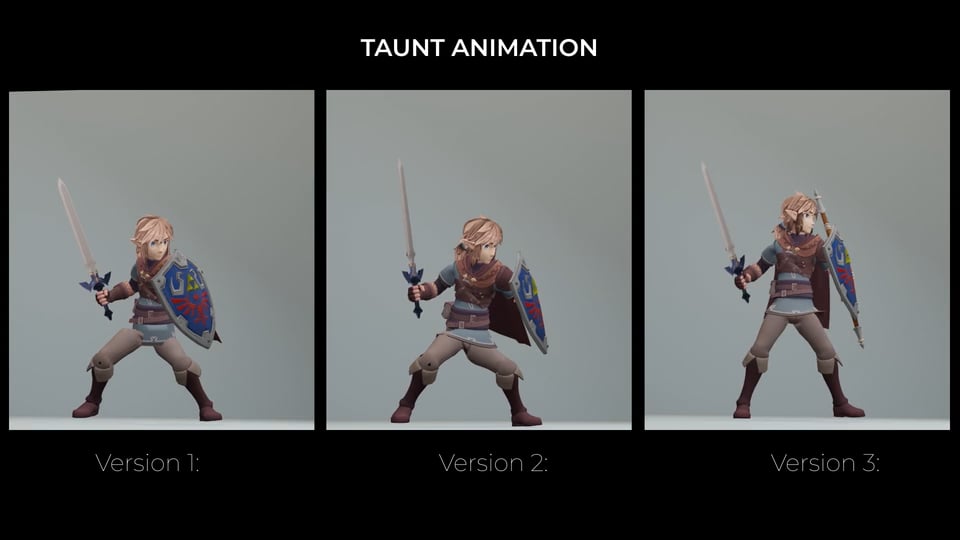
I made 18 Link animations (from Super Smash Bros. Ultimate, 2018) using three movement styles:
Version 1: Baseline (Original Gameplay movement)
Version 2: High Effort (Energetic, explosive, reckless)
Version 3: Low Effort (Calm, efficient, controlled).
This tested how body language, effort, and timing change how people see a character’s personality, skill, and appeal.
Solution
I made 18 Link animations (from Super Smash Bros. Ultimate, 2018) using three movement styles:
Version 1: Baseline (Original Gameplay movement)
Version 2: High Effort (Energetic, explosive, reckless)
Version 3: Low Effort (Calm, efficient, controlled).
This tested how body language, effort, and timing change how people see a character’s personality, skill, and appeal.
Solution
I made 18 Link animations (from Super Smash Bros. Ultimate, 2018) using three movement styles:
Version 1: Baseline (Original Gameplay movement)
Version 2: High Effort (Energetic, explosive, reckless)
Version 3: Low Effort (Calm, efficient, controlled).
This tested how body language, effort, and timing change how people see a character’s personality, skill, and appeal.
Challenges
Numerous constraints influenced both production and research outcomes:
Technical limitations: Limited the model deformation for exaggerating poses and motion.
Testing constraints: Only 13 of 22 participants completed testing due to issues with the Unity build.
COVID-19 Pandemic: Remote testing required due to lockdown restrictions
Challenges
Numerous constraints influenced both production and research outcomes:
Technical limitations: Limited the model deformation for exaggerating poses and motion.
Testing constraints: Only 13 of 22 participants completed testing due to issues with the Unity build.
COVID-19 Pandemic: Remote testing required due to lockdown restrictions
Challenges
Numerous constraints influenced both production and research outcomes:
Technical limitations: Limited the model deformation for exaggerating poses and motion.
Testing constraints: Only 13 of 22 participants completed testing due to issues with the Unity build.
COVID-19 Pandemic: Remote testing required due to lockdown restrictions
Process
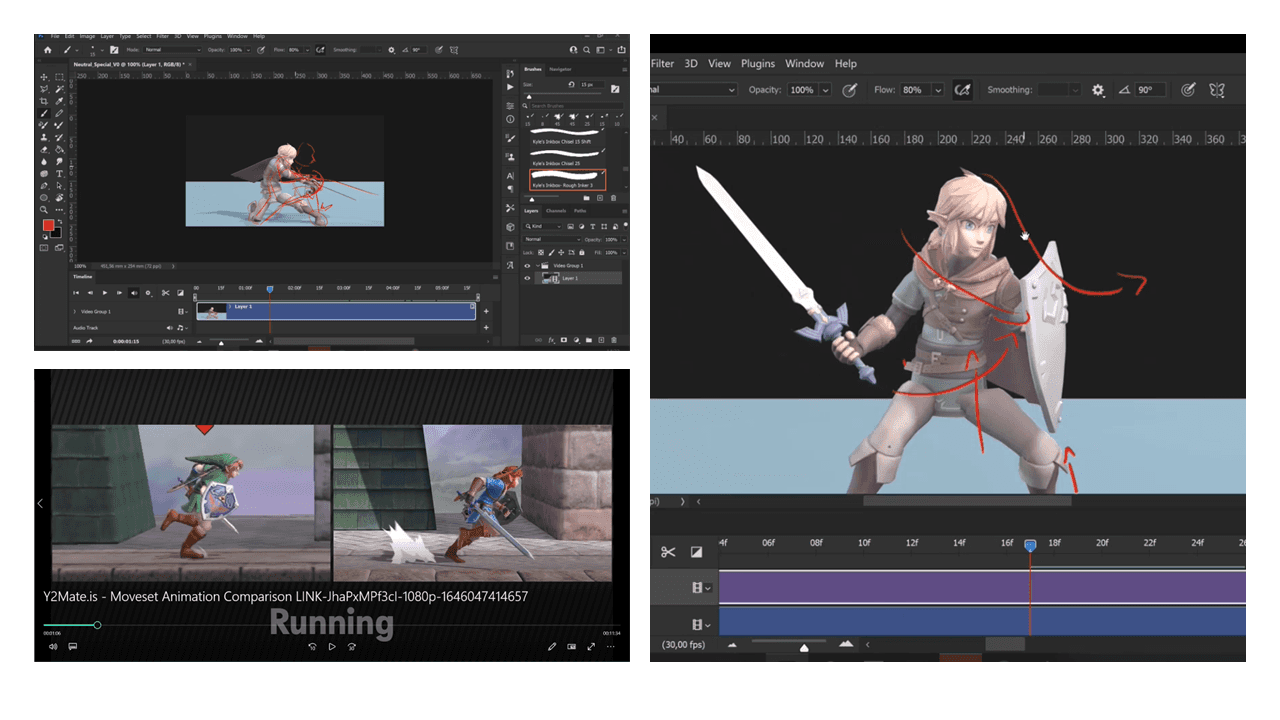
Animation Analysis: I studied Link’s combat moves using Disney’s 12 Principles of Animation, Laban Movement Analysis, Gallaher’s dimension of style, and game animation frameworks to identify different kinds of design patterns.
Participant Recruitment: I used online surveys to find participants and gather information about their game preferences, play styles, and backgrounds.
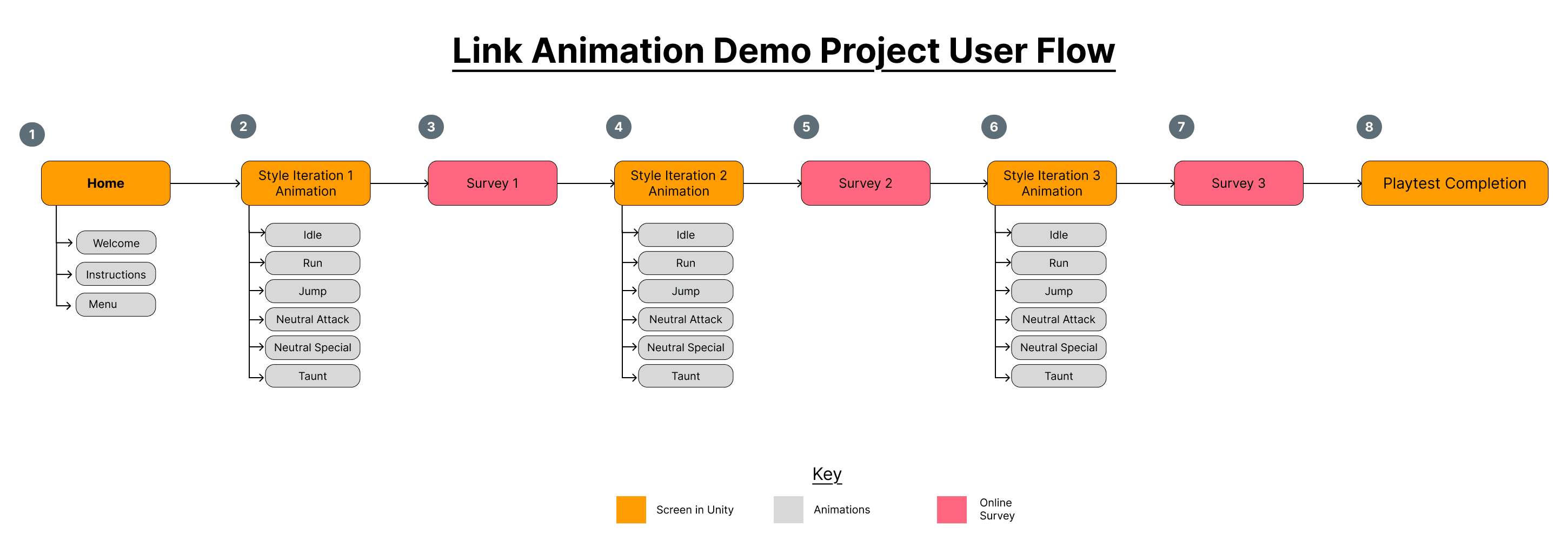
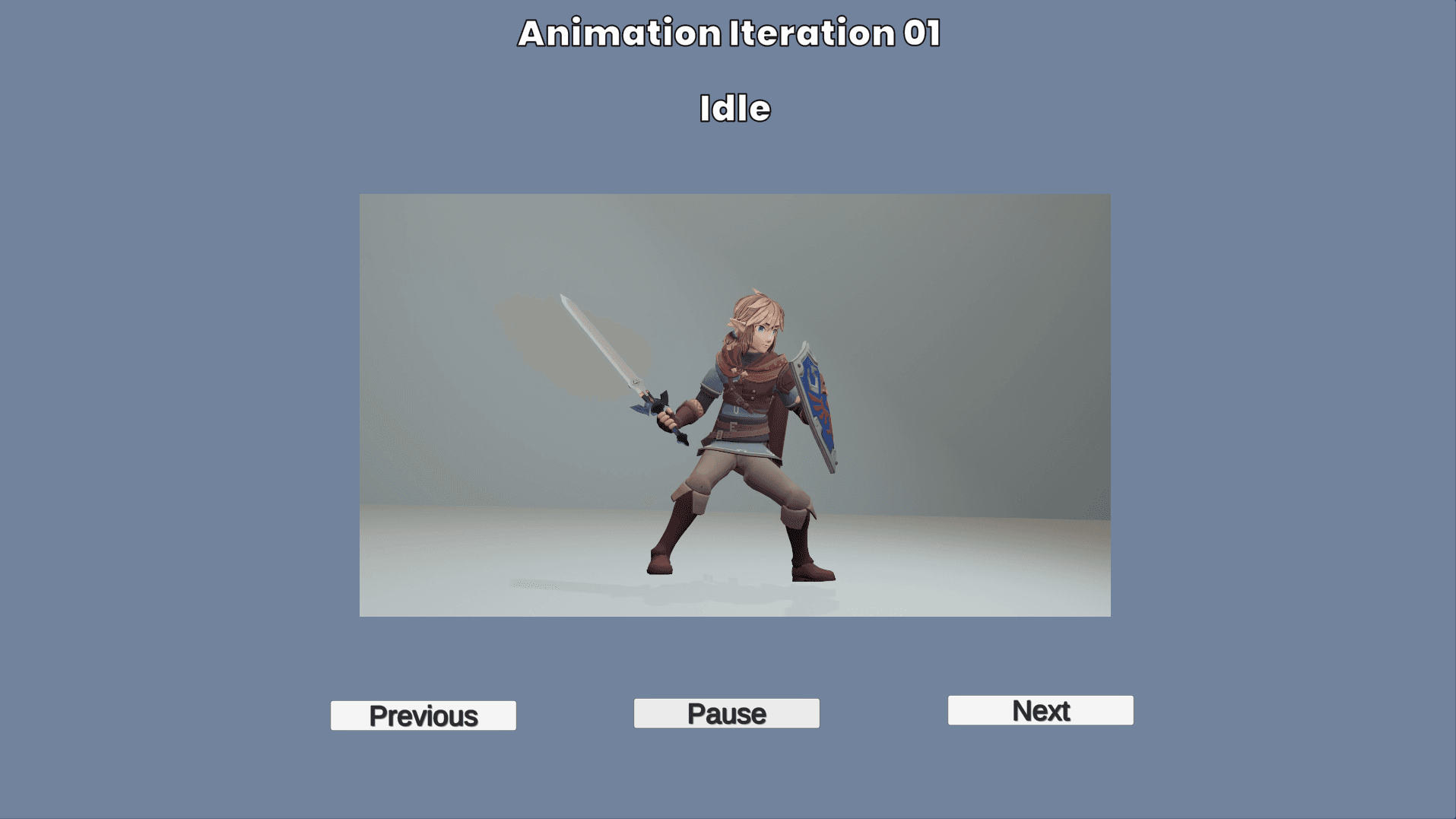
Prototyping & Development: I built a testing environment in Unity and made animations using Blender and iClone 7.
User Testing: 22 participants rated how clear the motion styles were, how appealing the character was, and how interested they were in playing the character.
Analysis: I looked for patterns in how people perceived the animations by comparing their ratings for each motion style to the baseline reference.
Process
Animation Analysis: I studied Link’s combat moves using Disney’s 12 Principles of Animation, Laban Movement Analysis, Gallaher’s dimension of style, and game animation frameworks to identify different kinds of design patterns.
Participant Recruitment: I used online surveys to find participants and gather information about their game preferences, play styles, and backgrounds.
Prototyping & Development: I built a testing environment in Unity and made animations using Blender and iClone 7.
User Testing: 22 participants rated how clear the motion styles were, how appealing the character was, and how interested they were in playing the character.
Analysis: I looked for patterns in how people perceived the animations by comparing their ratings for each motion style to the baseline reference.
Process
Animation Analysis: I studied Link’s combat moves using Disney’s 12 Principles of Animation, Laban Movement Analysis, Gallaher’s dimension of style, and game animation frameworks to identify different kinds of design patterns.
Participant Recruitment: I used online surveys to find participants and gather information about their game preferences, play styles, and backgrounds.
Prototyping & Development: I built a testing environment in Unity and made animations using Blender and iClone 7.
User Testing: 22 participants rated how clear the motion styles were, how appealing the character was, and how interested they were in playing the character.
Analysis: I looked for patterns in how people perceived the animations by comparing their ratings for each motion style to the baseline reference.
Design Decisions & Trade Offs
I balanced project scope, research goals, and technical limits to keep the project moving forward despite challenges.
Key Decisions
Selected Link (Super Smash Bros. Ultimate) for instant player recognition
Limited scope to 6 core actions: Idle, Run, Jump, Attack, Special, Taunt
Applied Laban Movement Analysis and animation principles to create three distinct motion styles
Built a custom Unity testing platform for controlled evaluation
Extended animation timing for clarity in isolated viewing
Trade-offs
Prioritised the 10-week deadline over polish due to technical delays
Rig constraints limited exaggeration despite design intent.
I left out visual effects to focus only on how people perceived motion.
I made the animations clearer for viewers rather than aiming for perfect frame accuracy.
I simplified the facial rig to reduce complexity and avoid errors.
Design Decisions & Trade Offs
I balanced project scope, research goals, and technical limits to keep the project moving forward despite challenges.
Key Decisions
Selected Link (Super Smash Bros. Ultimate) for instant player recognition
Limited scope to 6 core actions: Idle, Run, Jump, Attack, Special, Taunt
Applied Laban Movement Analysis and animation principles to create three distinct motion styles
Built a custom Unity testing platform for controlled evaluation
Extended animation timing for clarity in isolated viewing
Trade-offs
Prioritised the 10-week deadline over polish due to technical delays
Rig constraints limited exaggeration despite design intent.
I left out visual effects to focus only on how people perceived motion.
I made the animations clearer for viewers rather than aiming for perfect frame accuracy.
I simplified the facial rig to reduce complexity and avoid errors.
Design Decisions & Trade Offs
I balanced project scope, research goals, and technical limits to keep the project moving forward despite challenges.
Key Decisions
Selected Link (Super Smash Bros. Ultimate) for instant player recognition
Limited scope to 6 core actions: Idle, Run, Jump, Attack, Special, Taunt
Applied Laban Movement Analysis and animation principles to create three distinct motion styles
Built a custom Unity testing platform for controlled evaluation
Extended animation timing for clarity in isolated viewing
Trade-offs
Prioritised the 10-week deadline over polish due to technical delays
Rig constraints limited exaggeration despite design intent.
I left out visual effects to focus only on how people perceived motion.
I made the animations clearer for viewers rather than aiming for perfect frame accuracy.
I simplified the facial rig to reduce complexity and avoid errors.
Tools Stack





Results
Version 1: Baseline Recreation
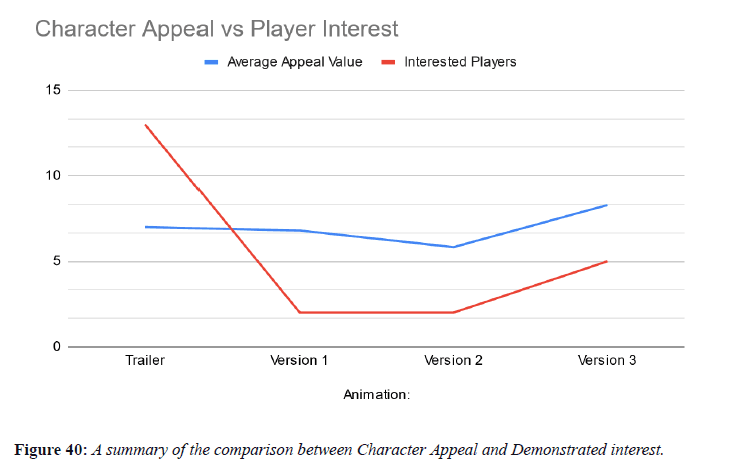
Appeal: 6.8/10 | Interest: 22.2% would play, 55.6% unsure
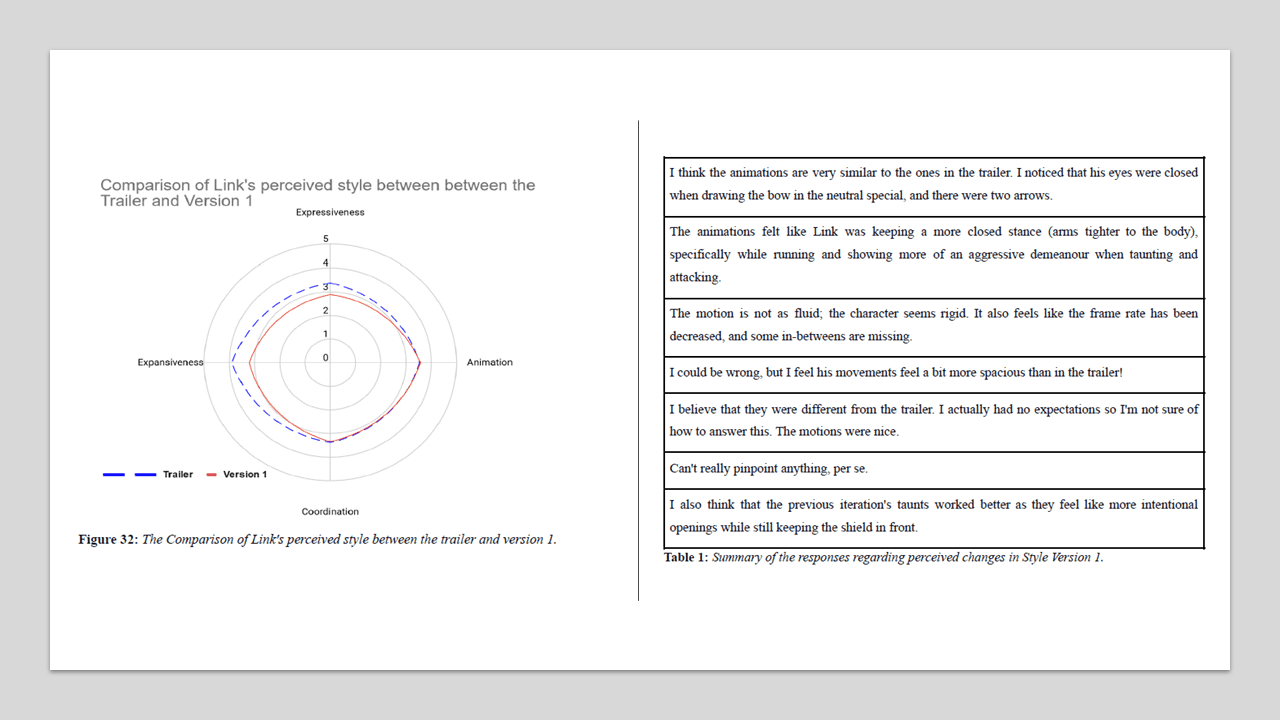
Perception: Lower expansiveness (3.22) and expressiveness (2.89) than trailer
Feedback: Described as faithful to character (confident and mature), but criticised as rigid and lacking fluidity.
Version 2: High Effort (Aggressive)
Appeal: 5.8/10 (lowest) | Interest: Evenly split (33.3% yes, unsure, no)
Perception: Highest expansiveness (4.33) and energy (3.83)
Feedback: Communicated high energy but appeared uncoordinated and reckless. Viewed as "janky" and "child-like," damaging perceived competence.
Version 3: Low Effort (Controlled)
Appeal: 8.3/10 (highest) | Interest: 71.4% would play
Perception: Highest coordination (4.29) and expressiveness (3.86),lowest energy (2.71)
Feedback: "Smooth like butter"—participants praised fluidity. Link appeared skilled, controlled, and cautious. Some noted slower moves might affect gameplay pace.
Version 3 succeeded because its coordination and control matched what players look for in a skilled and competent character.
Results
Version 1: Baseline Recreation
Appeal: 6.8/10 | Interest: 22.2% would play, 55.6% unsure
Perception: Lower expansiveness (3.22) and expressiveness (2.89) than trailer
Feedback: Described as faithful to character (confident and mature), but criticised as rigid and lacking fluidity.
Version 2: High Effort (Aggressive)
Appeal: 5.8/10 (lowest) | Interest: Evenly split (33.3% yes, unsure, no)
Perception: Highest expansiveness (4.33) and energy (3.83)
Feedback: Communicated high energy but appeared uncoordinated and reckless. Viewed as "janky" and "child-like," damaging perceived competence.
Version 3: Low Effort (Controlled)
Appeal: 8.3/10 (highest) | Interest: 71.4% would play
Perception: Highest coordination (4.29) and expressiveness (3.86),lowest energy (2.71)
Feedback: "Smooth like butter"—participants praised fluidity. Link appeared skilled, controlled, and cautious. Some noted slower moves might affect gameplay pace.
Version 3 succeeded because its coordination and control matched what players look for in a skilled and competent character.
Results
Version 1: Baseline Recreation
Appeal: 6.8/10 | Interest: 22.2% would play, 55.6% unsure
Perception: Lower expansiveness (3.22) and expressiveness (2.89) than trailer
Feedback: Described as faithful to character (confident and mature), but criticised as rigid and lacking fluidity.
Version 2: High Effort (Aggressive)
Appeal: 5.8/10 (lowest) | Interest: Evenly split (33.3% yes, unsure, no)
Perception: Highest expansiveness (4.33) and energy (3.83)
Feedback: Communicated high energy but appeared uncoordinated and reckless. Viewed as "janky" and "child-like," damaging perceived competence.
Version 3: Low Effort (Controlled)
Appeal: 8.3/10 (highest) | Interest: 71.4% would play
Perception: Highest coordination (4.29) and expressiveness (3.86),lowest energy (2.71)
Feedback: "Smooth like butter"—participants praised fluidity. Link appeared skilled, controlled, and cautious. Some noted slower moves might affect gameplay pace.
Version 3 succeeded because its coordination and control matched what players look for in a skilled and competent character.
Key Insights
Users picked up on personality and intent through motion, often without noticing. Their views changed when timing, weight, or exaggeration changed.
Users found clarity and expressiveness more appealing than realism. They quickly formed opinions based just on the animation style.
Clarity and expressiveness mattered more for appeal than realism.
Users quickly formed strong opinions based solely on the animation style.
This data made it easier to make clear UX motion decisions and trade-offs for future animation projects.
Key Insights
Users picked up on personality and intent through motion, often without noticing. Their views changed when timing, weight, or exaggeration changed.
Users found clarity and expressiveness more appealing than realism. They quickly formed opinions based just on the animation style.
Clarity and expressiveness mattered more for appeal than realism.
Users quickly formed strong opinions based solely on the animation style.
This data made it easier to make clear UX motion decisions and trade-offs for future animation projects.
Key Insights
Users picked up on personality and intent through motion, often without noticing. Their views changed when timing, weight, or exaggeration changed.
Users found clarity and expressiveness more appealing than realism. They quickly formed opinions based just on the animation style.
Clarity and expressiveness mattered more for appeal than realism.
Users quickly formed strong opinions based solely on the animation style.
This data made it easier to make clear UX motion decisions and trade-offs for future animation projects.
Best Style Perfomance
Version 3
Best Style Perfomance
Version 3
Best Style Perfomance
Version 3
Intent Conversion Rate:
71.4%
Intent Conversion Rate:
71.4%
Intent Conversion Rate:
71.4%
Perceived Appeal Score:
8.3 / 10
Perceived Appeal Score:
8.3 / 10
Perceived Appeal Score:
8.3 / 10
Outcome
Validated system for evaluating motion-based perception.
Clear evidence linking animation style to user interpretation.
Actionable principles for interaction and motion design.
In the end, these results show how motion insights can help designers create engaging, character-driven experiences and that UX thinking can go far beyond traditional interfaces.
Outcome
Validated system for evaluating motion-based perception.
Clear evidence linking animation style to user interpretation.
Actionable principles for interaction and motion design.
In the end, these results show how motion insights can help designers create engaging, character-driven experiences and that UX thinking can go far beyond traditional interfaces.
Outcome
Validated system for evaluating motion-based perception.
Clear evidence linking animation style to user interpretation.
Actionable principles for interaction and motion design.
In the end, these results show how motion insights can help designers create engaging, character-driven experiences and that UX thinking can go far beyond traditional interfaces.
Key Takeaway
Motion style directly affects how players connect with characters. Help players connect with a character by making sure the animation style shows the right traits, like competence and confidence. This leads to stronger engagement. This research highlights skill in designing focused UX studies and turning findings into practical motion design advice.
Key Takeaway
Motion style directly affects how players connect with characters. Help players connect with a character by making sure the animation style shows the right traits, like competence and confidence. This leads to stronger engagement. This research highlights skill in designing focused UX studies and turning findings into practical motion design advice.
Key Takeaway
Motion style directly affects how players connect with characters. Help players connect with a character by making sure the animation style shows the right traits, like competence and confidence. This leads to stronger engagement. This research highlights skill in designing focused UX studies and turning findings into practical motion design advice.